
Train the Trainer - Outdoors as a tool
Explore experiential education in Swedish and German Nature
Learn to learn by doing.
What's it all about?
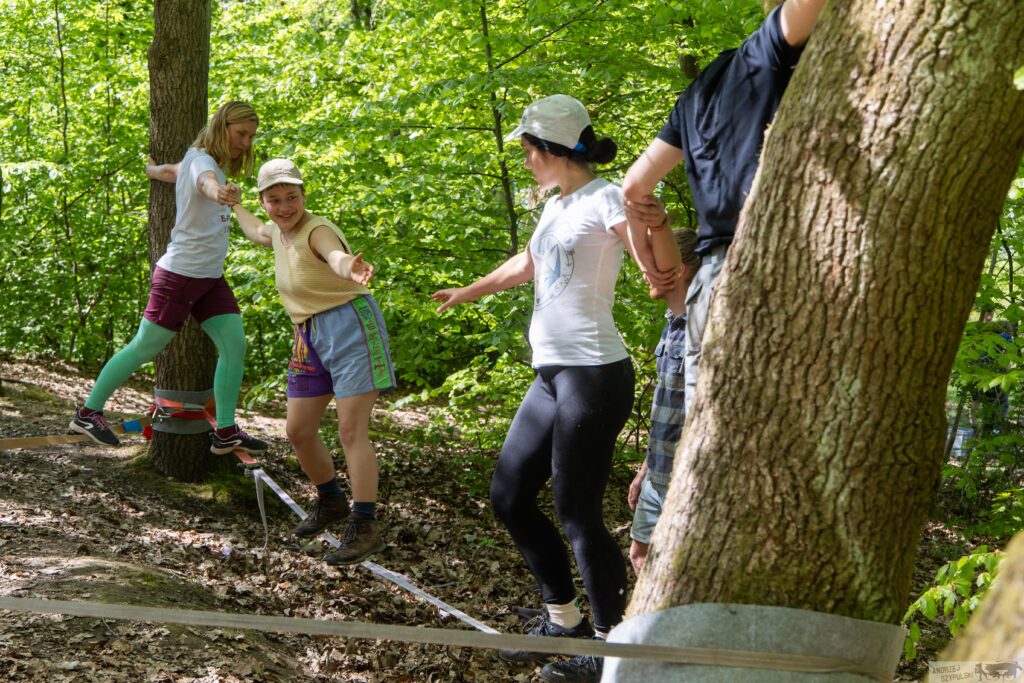
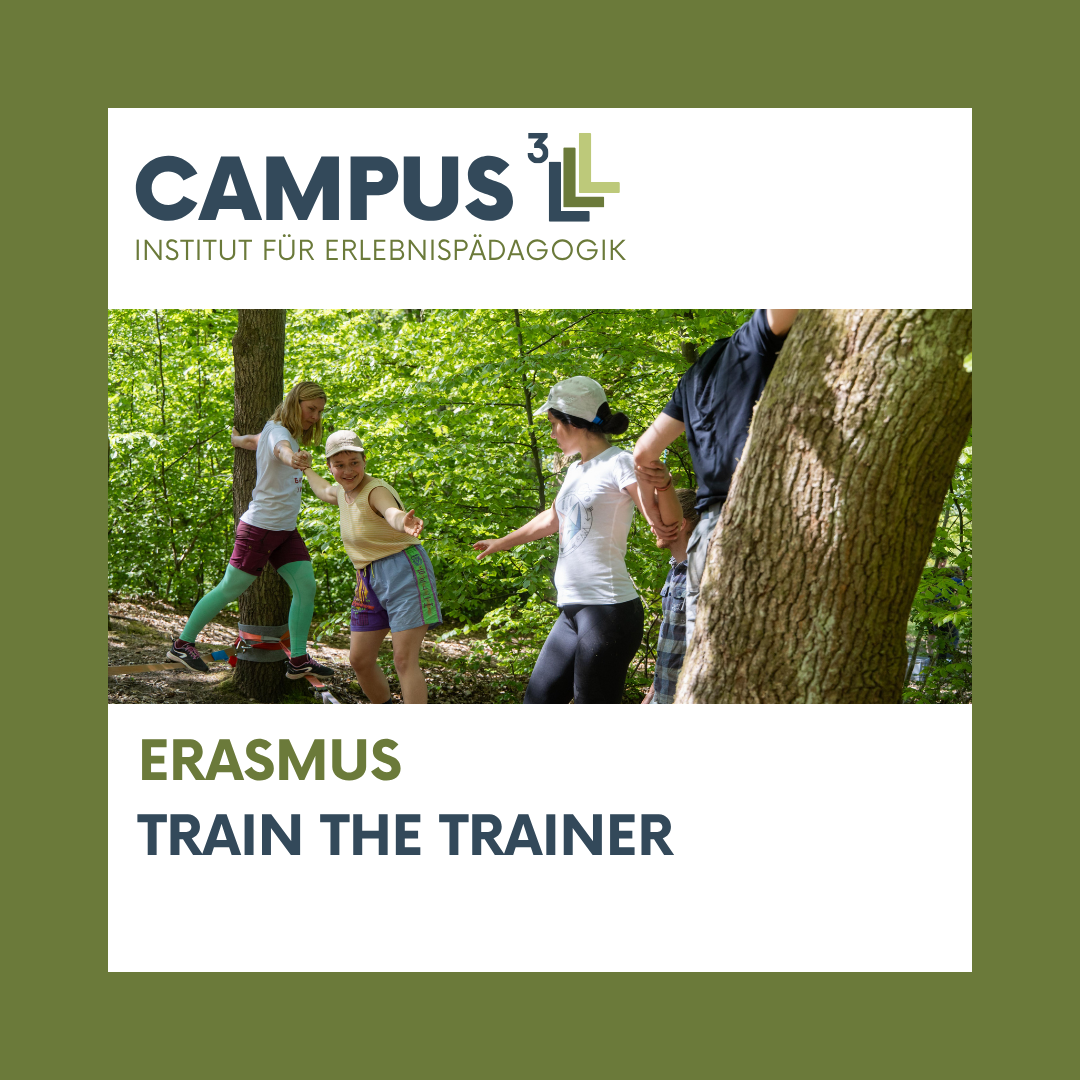
The TTT Sweden–Germany course is a two-week professional development programme, taking place in its first week in the nature of Sweden and continuing in its second week in Germany, in and around Kassel. It is designed for trainers, facilitators and educators who want to explore and strengthen the use of experiential education and outdoor education as a tool for learning and growth. Over the course of two weeks, participants will engage with methods, tools and theories of experiential and outdoor education, dive into facilitation and learning processes, and connect these with their own personal story and professional practice. The training combines theoretical input with hands-on experience: from survival basics, outdoor activities and expedition elements to facilitation, reflection and real-life application.
Do you want to join?
- Place
Week 1: YMCA Brevik, Sweden
Week 2: Termenei, Kassel, Germany
- Date
Week 1: 29th of May – 3rd of June
Week 2: 5th – 10th of September
Mind the traveldays!
- For whom
Workers with youth and young adults
- Register deadline
29.01.2027
- Costs
Participant Fee of 80 € per week; everything else covered by Erasmus +
- Reimbursement
See below
- Groupsize
up to 17 people
- Contact
mail: erasmus@campus-lll.de
tel: 0049 61518610051
- Objectives
- Develop Skills in Outdoor Education: Gain practical knowledge and techniques to integrate nature-based activities into your training repertoire with a specific focus on how to use those skills with (youth) groups.
- Enhance Personal Development: Learn how outdoor experiences can be used to facilitate personal growth and self-awareness among participants.
- Foster Social Learning: Discover strategies for using group dynamics in natural settings to promote teamwork, communication, and social skills.
- Build Resilience: Understand how outdoor challenges and experiences can strengthen individual resilience and coping strategies.
- Connect with Nature: Cultivate a deeper appreciation and connection to the natural environment, encouraging participants to respect and engage with nature.
- How
Week One, in Sweden, begins with an introduction to methods and tools that form the foundation of our experiential approach. Participants will explore the principles of experiential education and gain a deeper understanding of how and why we work the way we do. This is followed by a variety of formats in which we deliberately move participants out of their comfort zones to open up space for learning, engaging with topics such as boundary experiences, leadership, and personal growth. The week concludes with reflection and evaluation, as well as preparation for the second part of the course.
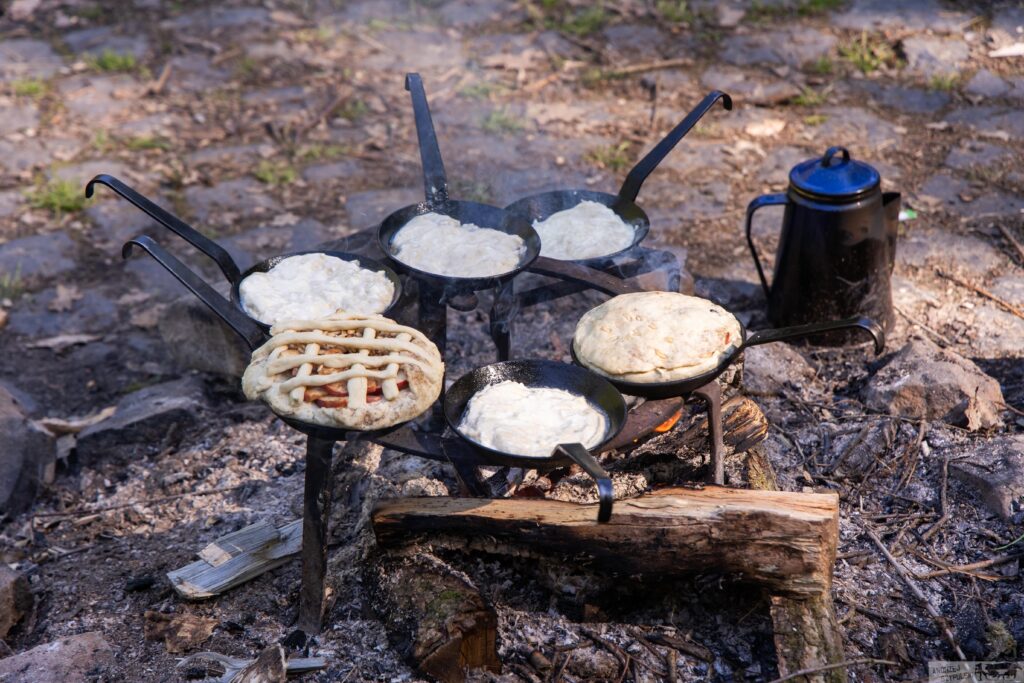
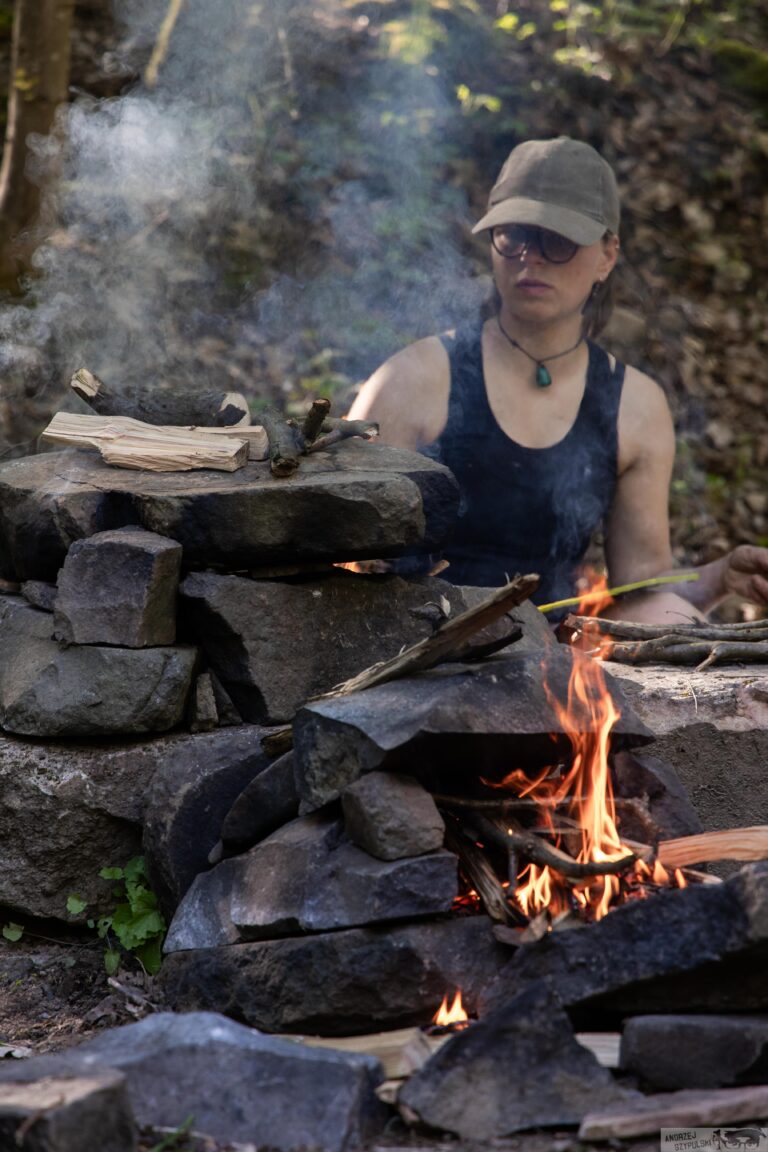
Week Two, in Kassel, focuses on further tools and methods, this time in different settings: in the air, on the water, and through working with a basic outdoor lifestyle (sleeping under tarps, cooking our meals over the fire). The emphasis lies on applying what has been learned in real-life contexts, working with an actual group, and testing the transferability of skills and knowledge. The week ends with a structured evaluation and feedback process.
Both weeks are shaped not only by professional and methodological learning, but also by strong elements of personal development. Reflection phases, facilitated feedback, and peer exchange run throughout the programme, ensuring that participants leave with practical skills, personal growth, and confidence to implement experiential education in their own contexts.
We have deliberately chosen not to share too much detail about the programme in advance. We see this as a core element of experiential education — learning to embrace uncertainty, to open yourself up to new experiences, and to step forward without needing to be fully “in control” from the start. We use this intentionally to invite participants out of their comfort zone and to engage with what lies ahead with an open mind.
We are confident that this approach will only bring benefits, and that taking this step will lead to a steeper and richer learning curve for everyone involved. That said, if this is something that genuinely holds you back from signing up, please don’t hesitate to reach out to us directly — we are happy to talk it through.
- For whom
We have developed this program to expand the knowledge of experienced trainers, facilitators, and coaches and to inspire them to try something new while enhancing their professional toolkit.
We invite participants from the fields of youth work, facilitation, group training, and (non-)formal education— whether in schools or adult education, including teachers and social workers. Ideal participants should have a foundational understanding of action-based learning and possess basic knowledge of group dynamics, as well
as an affinity for the outdoors.
This seminar is perfect for those looking to enhance their practical skills in the outdoors while applying and expanding their expertise in teamwork, cooperation, and effective communication within diverse group settings. Feel free to contact us for further information.
- Outcomes
What will you unlock by participating TTT?
You will have the chance to
- have a hands-on outdoor experience
- have the knowledge to do proper risk assessment & the importance of it
- learn to plan nature in your programs
- learn new activities
- learn new facilitation and training tools
- facilitate workshops
- learn to deal with challenges in a sustainable manner
- learn to stay professional & perform even when out of your comfort zone
- handle unexpected situations as a facilitator & co-facilitator
Accomodation
In Sweden, we’ll be staying at the YMCA Brevik, surrounded by beautiful Swedish nature, with trees, rocks and water all around us. The house offers cozy multi-bed rooms and a seminar room, and full catering will be provided for us. Here is the link to the venue: https://kfumbrevik.se/
In Kassel, Germany, we’ll learn how to build a basic shelter, or you can bring your own tent. We’ll live right in the middle of nature, cooking over the fire and experiencing a simple, back-to-basics lifestyle. We will be staying at a campsite in nature in the middle of germany.
What you should pack
For both weeks:
hiking boots
sport shoes
small backpack for day-hikes
minimum of 1-litre water bottle (or PET bottle) and thermo bottles
cap, sunglasses & sunscreen
scarf or buff (the last one is recommended)
raincoat / waterproof jacket, trousers
clothing according to the weather
warm layers
wind catcher
toiletry
pyjamas/ clothes that you sleep in
- personal medication (for example: for allergies)
- bathing clothes
For the second week
- sleeping bag
- mattress
- optional: tent
- headlamp/torch
- if you have: biodegradable toiletry
a knife (for carving and as outdoor tool) (optional)
cool outdoor gadgets (if you have them 🙂
If you don’t have all of these items, let us know and we’re trying to find a solution together.
Please do not bring alcohol or illegal drugs of any kind.
Travel
Traveldates:
Week 1: Traveldays are 28th of may and 4th of June.
Week 2: Traveldays are 4th and 11th of September
There will be a section in the registration, where you’re able to provide your travel information (even if it’s only an estimation for now). Once you’re accepted we will let you know further details about traveling.
Venue/Location:
Week 1 will be held at the site of YMCA Brevik in Sweden. On their website you’ll find a section about how to get there: https://kfumbrevik.se/kontakta-oss
Week 2 will be held at the Termenei in Germany near Kassel. Here is a link to the site, however the meeting point will be slightly different: https://share.google/asaL0LZU5nhKjrpLE
Travelreimbursement
You will be reimbursed according to the guidelines of the KA 151 Erasmus Reimbursement.
Please determine your travel category here: https://erasmus-plus.ec.europa.eu/resources-and-tools/distance-calculator
| Overview Reimbursement | ||||
| Distance | Green Travel | Non Green Travel | ||
| 10–99 km | 56 EUR | 28 EUR | ||
| 100–499 km | 285 EUR | 211 EUR | ||
| 500–1999 km | 417 EUR | 309 EUR | ||
| 2000–2999 km | 535 EUR | 395 EUR | ||
| 3000–3999 km | 785 EUR | 580 EUR | ||
| 4000–7999 km | 1188 EUR | 1188 EUR | ||
| 8000 km or more | 1735 EUR | 1735 EUR | ||
| Green Travel = Walk, Bike, Carpool, Motorcylce (with two travelers), train, bus | ||||
| Non Green Travel = Alone in Car, Alone on a Motorcyle, Airplane | ||||
| If one of the elements in your travel is Non Green Travel, the whole travel is considered Non Green Travel | ||||
Weiterbildung, die wirkt: Stimmen aus der Praxis

„Die thematische Vielfalt des
Kurses war beeindruckend und sorgte für eine spannende Auseinandersetzung mit unterschiedlichen Aspekten.
Das breite Spektrum an Referent*innen brachte vielfältige Perspektiven und fachliche Tiefe ein.“
„Die Veranstaltung bot einen sehr guten Einblick in das Thema und regte zum Weiterdenken an.
Besonders hervorzuheben sind die Denkanstöße, die zum Reflektieren und Vertiefen der Inhalte einladen.“
„Der Kurs überzeugte durch seine kompakte Form und konzentrierte sich auf die wichtigsten Inhalte für Fachkräfte in der sozialen Arbeit.“
The Team
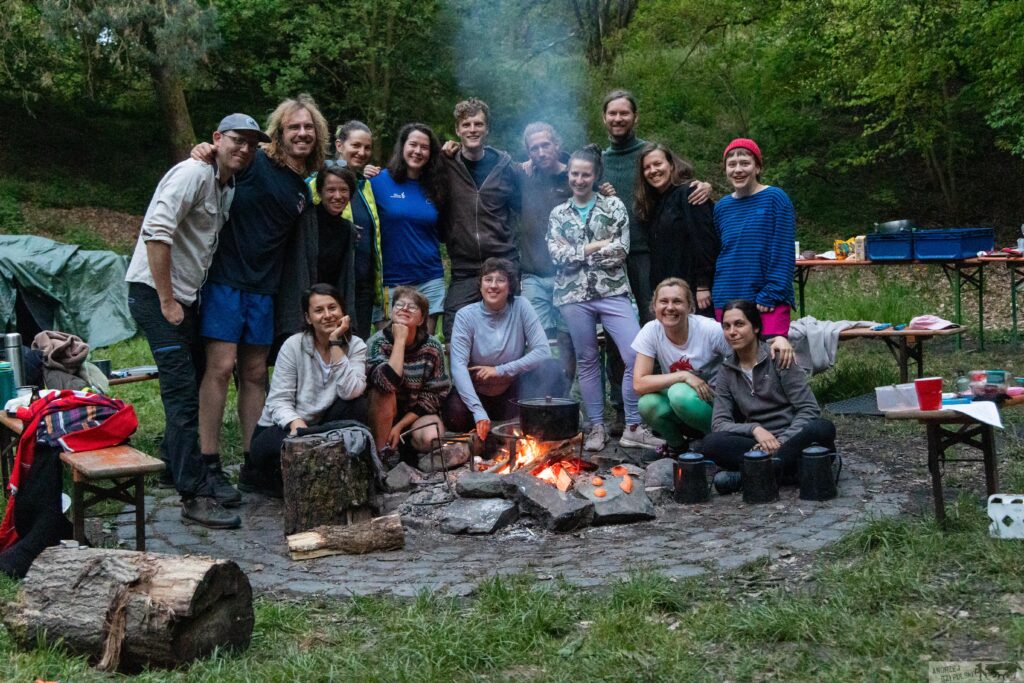
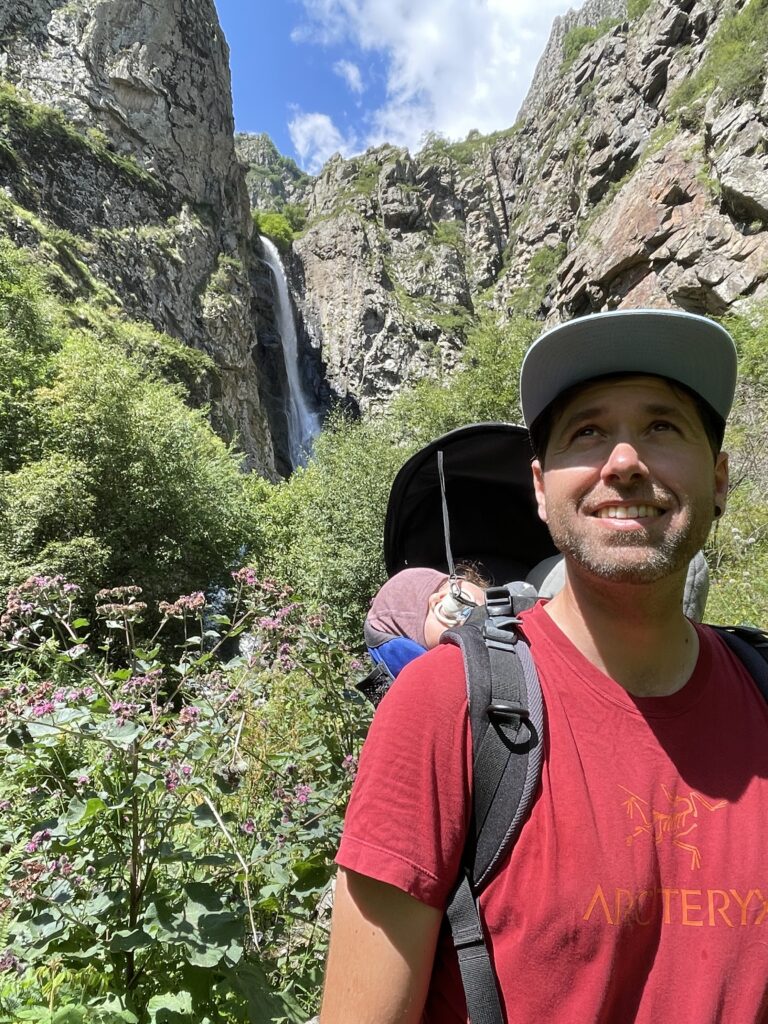
The programme is led by two experienced trainers, Leslie and Rüdiger. Leslie has worked in experiential education and the outdoors for many years. She grew up in the Netherlands, where she works as a freelancer and teaching trainer in cooperation with a range of different partners. Rüdiger is an experienced experiential educator from Germany who has been self-employed for several years. He is also a co-founder of a team and organisational development company, and he loves to work outdoors. Both are already looking forward to meeting the group and are excited to work together with you over the two weeks.

Leslie van LoonBuitendoor NL

Rüdiger WesthauserInstitute of Outdoor Education

Häufig gestellte Fragen
Für wen eignet sich dieses Seminar?
Für alle, die Bogenschießen als pädagogische Methode in ihrer Arbeit mit Gruppen einsetzen wollen. Vorkenntnisse sind nicht erforderlich.
Brauche ich eigene Ausrüstung?
Nein. Material und Ausrüstung sind im Kurspreis enthalten. Du musst nichts mitbringen.
Wie ist der Kurs aufgebaut?
Wie viele Personen nehmen teil?
Welches Zertifikat erhalte ich?
Was ist im Preis enthalten?
Photos taken from various previous trainings by Andrzej Szypulski (https://www.instagram.com/andrzejstasiu/)
Weitere Empfehlungen für deine Weiterentwicklung
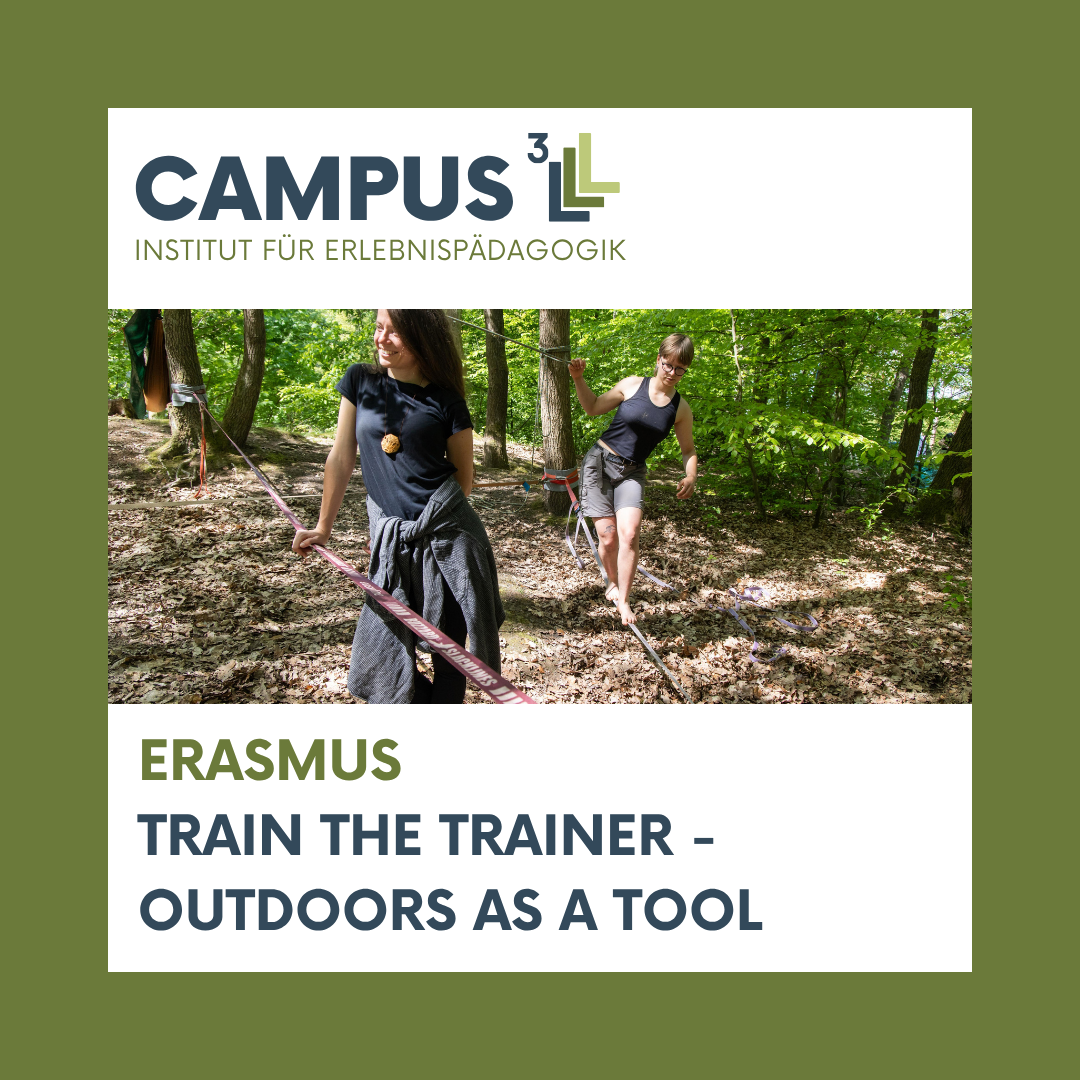
Train the Trainer – Outdoors as a tool
Participant fee of 80 € per week, the rest is covered by Erasmus Plus

Hiking in Spain – Erasmus Train the Trainer
Participant fee of 80 €, the rest is covered by Erasmus Plus
Campus 3L
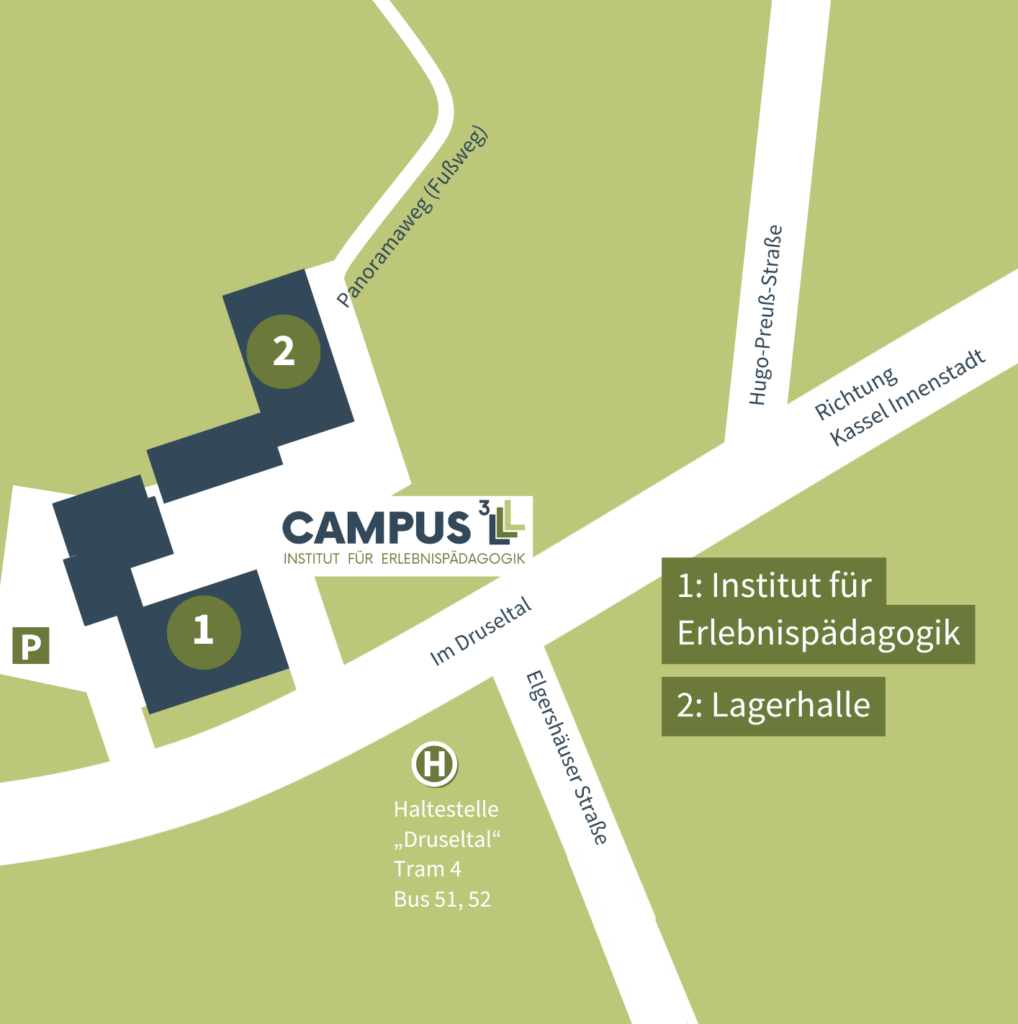
Das Institut für Erlebnispädagogik befindet sich nur ca. 15 Minuten mit dem ÖPNV vom Bahnhof Kassel Wilhelmshöhe entfernt. (Im Druseltal 8 | 34131 Kassel ). Das Lager befindet sich auch direkt auf dem Gelände. Die Seminare und Schulungen finden jedoch im Regelfall nicht hier statt.
Anreise mit der Bahn:
Von Kassel Wilhelmshöhe bist Du entweder mit der Strassenbahn 4 (Drusetal) oder dem Bus 52 (Martinhagen) schnell bei uns. Die Haltestelle ist direkt gegenüber
Anreise mit dem Auto:
Gib in Dein Navigationsgerät folgende Adresse ein:
Im Drusetal 8, 34131 Kassel
Aus Richtung Frankfurt (A7):
Verlasse die A7 an der Ausfahrt Kassel-Bad Wilhelmshöhe und folge der Beschilderung Richtung Bad Wilhelmshöhe. Von dort aus fährst Du weiter in Richtung Druseltal in den Stadtteil Bad Wilhelmshöhe.
Aus Richtung Dortmund (A44):
Nimm die Ausfahrt Kassel-Wilhelmshöhe und folge ebenfalls der Beschilderung Richtung Bad Wilhelmshöhe / Druseltal.
Vor Ort stehen Dir in der Umgebung Parkmöglichkeiten zur Verfügung.